HISTORY OF THE BALDWIN FIRE DEPARTMENT
By the late 19th century, Baldwin had grown into a small country hamlet, and people from the city were beginning to travel on the South Shore Railroad for weekends of fishing and relaxation. Baldwin began developing along Grand Avenue, from the railroad south to the old stagecoach “Plank Road,” now called Merrick Road.
 It was at the corner of this intersection that Mr. Baldwin built a hotel and, on the opposite southeast corner, a large mercantile building that gave Baldwin its first general store. This was before telephones, and the only way to report a fire was by seeing the reflection of the flames in the sky or by sending a fast horseback rider. The surrounding fire departments would then respond to help save the rest of the village from total destruction.
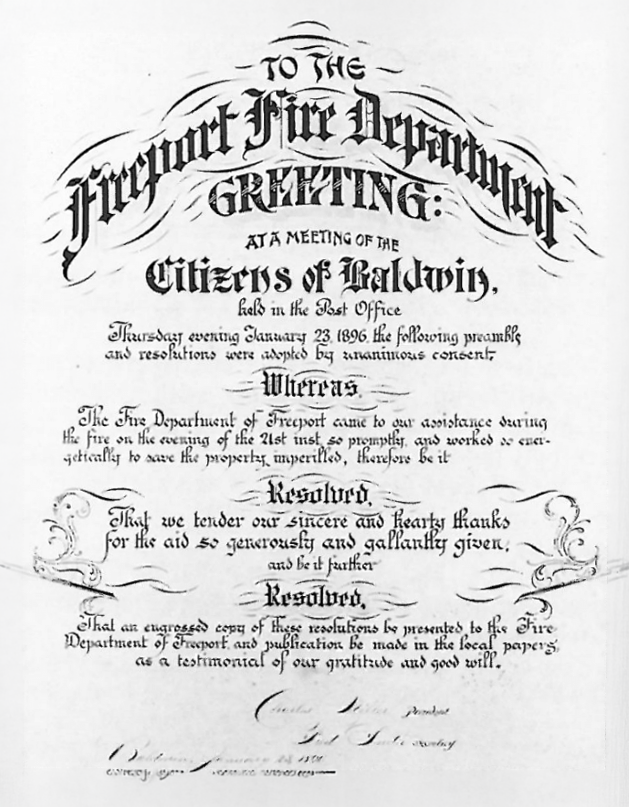
On a very cold Tuesday night in January 1896, the Baldwin General Store caught fire after a kerosene lamp was dropped. Baldwin had no fire department, so volunteer firefighters arrived from Freeport to prevent further destruction. It was decided by a group of citizens that Baldwin needed fire protection, and on January 23, 1896, a meeting was held in the post office. A citation was drawn up and sent to the Village of Freeport, thanking them for their assistance in extinguishing the Baldwin fire. During the meeting, it was suggested that a fire department be organized, and a meeting was set for Saturday, January 25, 1896.
At this meeting, John H. Carl nominated August Imming, who was unanimously elected Chairman. Robert W. Robbins was elected Secretary, and Jacob Brower was elected Treasurer. This was the beginning of the Baldwin Fire Department. Pledges that first night totaled $200.00, and a Ways and Means Committee was appointed to raise additional funds.
The official formation of the Department took place at the next meeting on February 8, 1896, with Charles Smith elected President and John Carl elected Vice President. The first two companies of the Baldwin Fire Department were formed on March 5: Hose Company #1 and Hook & Ladder Company #1. A Foreman was appointed to represent each company, and they, in turn, selected volunteers from the audience to become members. This was the beginning of today's Department.
 The first pieces of apparatus were purchased on Canal Street in New York City for $680.00. They consisted of a horse- or hand-drawn hook-and-ladder and bucket wagon, a hose wagon, and a quantity of fabric hose. A small hand water pump was attached to the wagon to pump water from wells to the fire scene, where it was used to fill the buckets. The apparatus was delivered and placed in service in April 1896.
The first uniforms of the Department consisted of a regulation cap, a white sweater with the name “Baldwin” across the chest, and a black belt. Forty members paid $3.90 each for their own uniforms.
 A large locomotive wheel rim was strung between two poles and struck with a large sledgehammer to serve as an alarm bell.
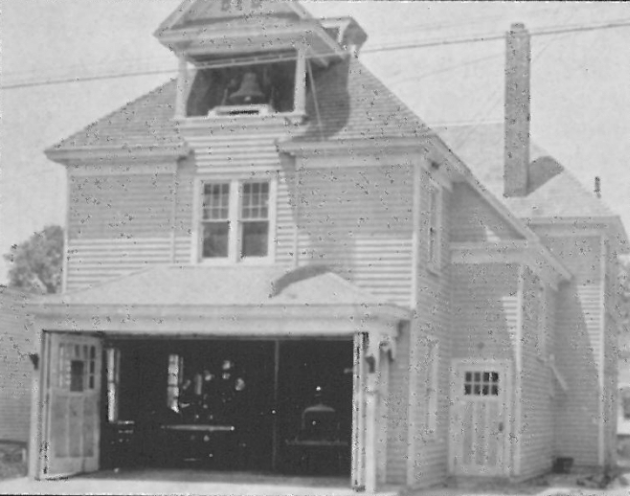
In June 1896, Baldwin attended its first tournament and parade in Freeport. The Department purchased property from Mrs. William Kennedy at the corner of Prospect Street and Grand Avenue. Construction of the first firehouse began on this site in the fall of 1898. It was a two-story building, with a large hall on the second floor and room for two pieces of apparatus on the first floor. The hall was rented at times, and court was held there for many years. The final mortgage payment of $100.00 was made in May 1905. A fire bell was installed in the belfry to summon volunteers. In 1929, the building was moved to the rear of the property to make room for construction of a new firehouse.
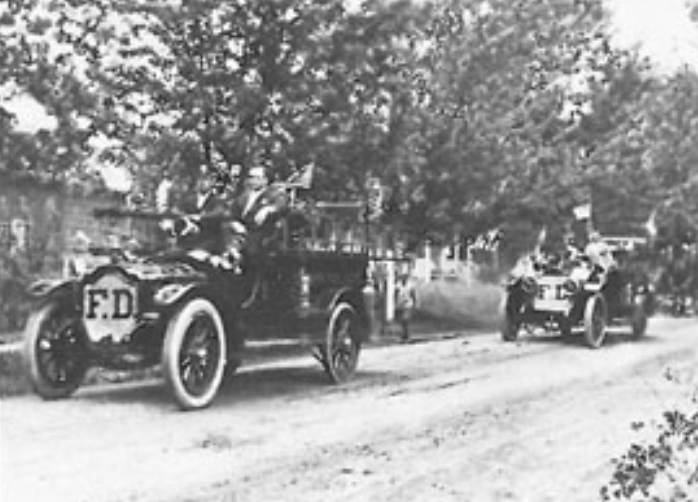
Until 1914, horses or men pulled the apparatus to fires. A five-dollar fee was paid to anyone who helped pull the apparatus with a team of horses. The first motorized truck was an ice wagon converted into a fire truck by Freeport blacksmith Theodore Bedell. The truck, purchased in Port Washington, was known as a “Thomas Floranto” and was considered one of the most reliable trucks available.
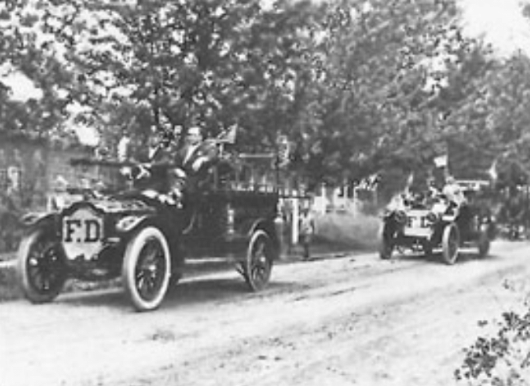 The truck was turned over to Hose Company #1 by the Department, and Hose Company #1's wagon was transferred to the newly organized Hose Company #2 on Church Street. The Hose Company #2 firehouse was built on property donated by the Baldwin Harbor Realty Co. to promote sales and provide closer fire protection for the houses being built in the harbor.
The hook-and-ladder wagon carried a water pump, buckets, and ladders. It was later converted into a trailer pulled by a tractor. The tractor was a donated REO touring car from which the body had been removed.
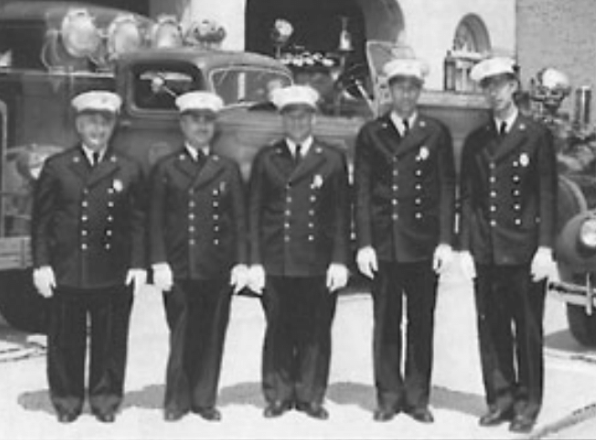 When a call of “Fire” was reported, the bell in the firehouse belfry would be rung by a pull rope hanging in front. When the first volunteer arrived, he would enter the building, telephone the Milburn Pumping Station located between Baldwin and Freeport, and request that the steam whistle be blown to alert the men. The coded whistle was used for more than 50 years, courtesy of the City of Brooklyn. The code was printed on cards, and when members of the public made donations to the Fire Department, they received cards listing all intersections in town. Interestingly, the cards also included a signal for a riot, which was used when the Sheriff needed assistance from the volunteers.
It was the practice of the Fire Department to hold carnivals to raise funds. Block dances were always held in front of the firehouse. The Fourth of July was a major event, featuring a parade and floats. Firemen demonstrated their skills with tournaments and water fights, and the day ended with a fireworks display. At the time, most of the activity was held in a large field located at Central Avenue and Clinton Place.
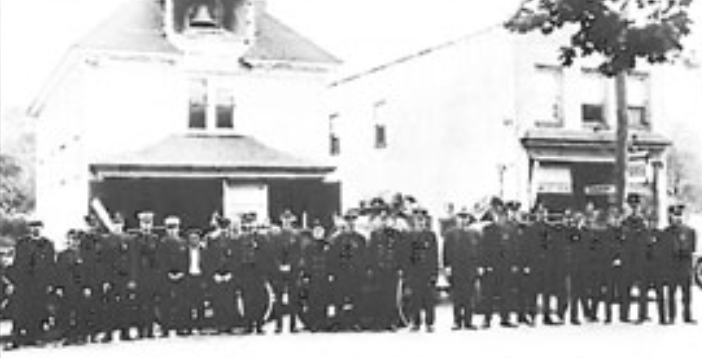 After the war, returning veterans revitalized the Department, and Hose Company #1 obtained a new REO “Speed Wagon,” which was called “Beautiful.” Hose Company #1's old truck was given to a group of men in the “North” Baldwin area, and Hose Company #3 on Baldwin Avenue was organized.
A “North” company became necessary when train gates were installed along the railroad. When the gates were lowered, no truck could proceed north until the train left the station. The engineers and railroad officials would not cooperate with the firemen in raising the gates.
In January 1922, construction of a new firehouse began on Baldwin Avenue. The new firehouse was completed in the spring of 1922, just in time for the grass and woods fire season.
In August 1921, Hose Company #2 obtained a new GMC hose truck, and in March 1922, the Hook & Ladder Company purchased a used Peter Pirsch Mack Cities Service truck, complete with a chemical tank.
 The men attended drills and learned firefighting techniques, but they now lacked a pumper. The water hydrants in Baldwin had very low pressure and, at times, made the hose wagons virtually useless. Baldwin was growing rapidly, with additional land development and an influx of commuters.
The firemen were also called upon to assist the Nassau County Sheriffs when riots occurred. A pumper was badly needed for the Church Street fires of 1922 and 1927, which consumed all the stores on the north side of the street between Milburn Avenue and Harvard Place.
On December 14, 1923, Calvary Protestant Church burned down. School #1, at the foot of School Street, burned down in 1925. In 1926, a terrific explosion rocked the station area, killing three people at Railroad Avenue, now Sunrise Highway and Grand Avenue, on the southeast corner. The blast could be felt in Rockville Centre and Freeport, both of which sent pumpers to help extinguish the inferno.
The Baldwin Fire Department had had enough. The men began a door-to-door drive to raise money for a $16,000 Ahrens Fox pumper, but they fell short of their goal.
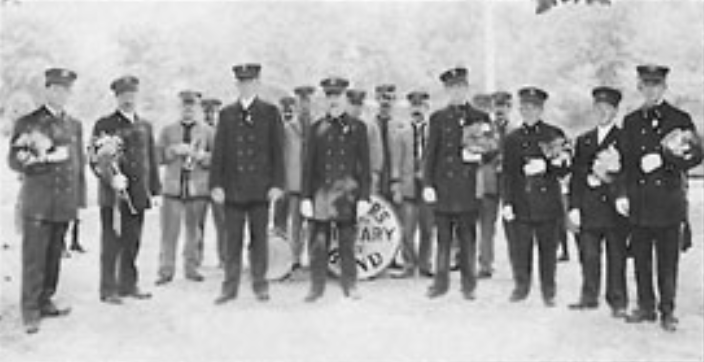 In the meantime, Hose Company #1 was attending tournaments and making a name for Baldwin. The company won the championship at a State Convention in Freeport. People from all over the State asked, “Where is Baldwin?” Syracuse soon found out that it was on Long Island. Baldwin kept the title for years, with Merv Guenther serving as Captain of the team.
Hose Company #1 attended the State Convention held in Freeport and broke a State record, winning first place in the State of New York with the REO. The Mayor of Long Beach had donated the cup and was infuriated when his “crack team” of New York City firemen lost to little old Baldwin. Long Beach went down to defeat.
By 1925, it was clear that Baldwin needed to form a fire district in order to purchase the much-needed pumper. Petitions were circulated by the firemen to establish a fire district. In 1926, the Fire District was established, and the Department was thereafter supported through taxes.
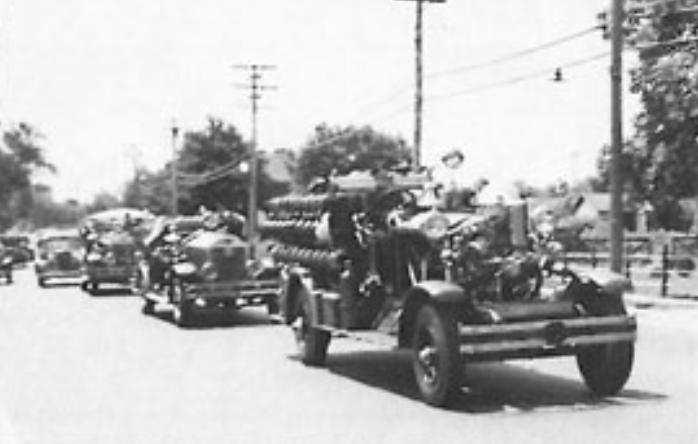 One of the first actions of the Fire Commissioners was to order the first pumper, an Ahrens Fox 1,000-gallon pumper. The Ahrens Fox was considered one of the finest pumpers in the country and was the same type used by the New York City Fire Department. It could pump water to the top of the Woolworth Building in New York City.
Hose Company #1 was assigned this pumper, and the Headquarters floor had to be reinforced to carry its weight. An addition was also made to the building.
The REO was then used as a hose wagon, and the company became known as Hose #1, Engine Company #1. A slogan on the firehouse read, “The Pride of Baldwin.”
With the conversion from a corporation to a fire district, all the firehouses and apparatus were turned over to the District for the sum of one dollar. The Fire District replaced the Hose Company #2 building in 1928.
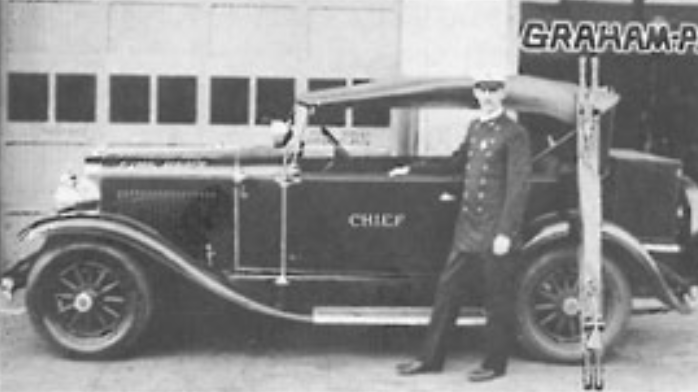 Chief Morgan was given the first Chief's car, a Graham-Paige touring car that could be used as an ambulance and first-aid vehicle. It was equipped with a “Pullmotor” stored in a trunk at the rear, to be used at smoky fires.
During this period, Baldwin was called upon many times for mutual aid, using the 1926 Fox pumper. It was common practice to obtain permission from the Fire Commissioners to “roll.” Sal Sorrentino and Walt Donnelly were the Chief pump instructors.
Fires in Long Beach, easily visible from Baldwin, looked like barn fires, and the cry was, “Here comes Baldwin's Fox!” Many times, police escorts were provided to make the six-mile run to Long Beach in twelve minutes.
The other companies also wanted pumpers because of the low water pressure in the hydrants, often ten pounds or less. The firemen all wanted Ahrens Fox apparatus, but word got out that Baldwin's 1926 Fox had been used as a demonstrator model before coming to Baldwin. Therefore, when bids came in for two new pumpers and a ladder truck, the Commissioners decided to purchase American LaFrance pumpers and a Cities Service ladder truck.
Baldwin now had three pumpers and an up-to-date ladder truck, but the “Great Depression” was beginning. Many firemen were out of work.
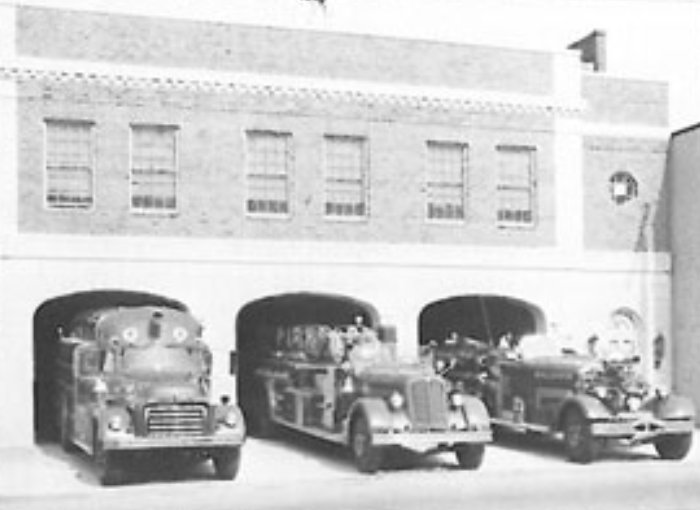 The Commissioners wanted to put an addition on the old wooden Fire Headquarters, but Chief Sal Sorrentino said, “We need a new firehouse.” The old building was dilapidated, and the floor creaked under the weight of the new trucks.
The Board of Fire Commissioners decided to erect a new Headquarters building with the approval of the W.P.A. The current Headquarters, W.P.A. Project #4356, was dedicated in April 1936. It was built by the Easterbrook Company of Hempstead and provided work for local residents.
The Department now had one of the finest buildings in the county, complete with showers and lockers. The installation of the Chief was held at the new Headquarters building, with food provided by a caterer and dancing to the “Honey Potter Orchestra” from Freeport.
Work was scarce, and the firemen were sent out to burn off empty lots to prevent grass fires. The men were paid 50¢ an hour by the District. At the time, a pack of cigarettes cost 10¢ and a gallon of gasoline cost 12¢.
Chief Sorrentino established a District alarm system for small fires, with only two hose companies responding. A dispatcher lived with his wife on the second floor of Hose Company #3. When Headquarters was built, he moved to the apartment on the third floor, and all alarms were dispatched from that location.
Some of the major fires of this era included the many out-of-town calls to Long Beach and Freeport, the Morse fire on Verity Lane that killed five people, and the old Baldwin Inn at the northwest corner of Grand Avenue and Merrick Road. There was also the Oceanside Gulf gasoline tank fire.
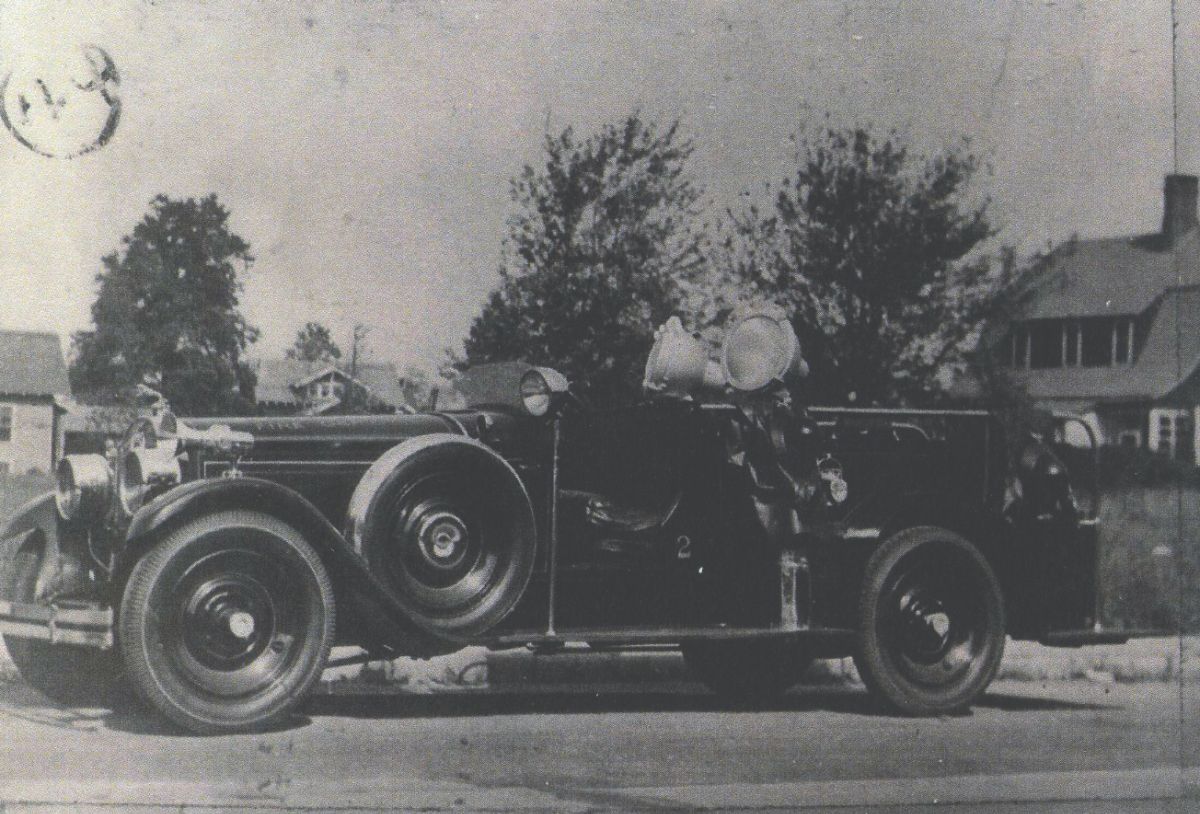 In the early 1930s, Hose Company #2 converted an old Packard into a floodlight and ambulance truck. This marked the beginning of the Baldwin First Aid Unit.
In the early days of Meadowbrook Hospital, its ambulance was the only one available on the South Shore. When the Baldwin First Aid Unit was called, it usually took thirty minutes or longer for the volunteers to respond in the Packard, after which they transported patients to South Nassau Communities Hospital. If it was raining, an umbrella was a necessity because the Packard had an open body.
Prior to this, Hose Company #2 had another Packard that was used for tournaments but was later disposed of to make room for the newer Packard light truck. Dr. Gaillard, a local physician, along with Dr. Musso, a local druggist, provided first-aid classes at Hose Company #2's firehouse.
In 1938, the First Aid Company officially came into being. It was one of the first such units in Nassau County and was called the Baldwin First Aid Company. It was authorized by the Nassau County Red Cross, as volunteers were required to be instructed and tested.
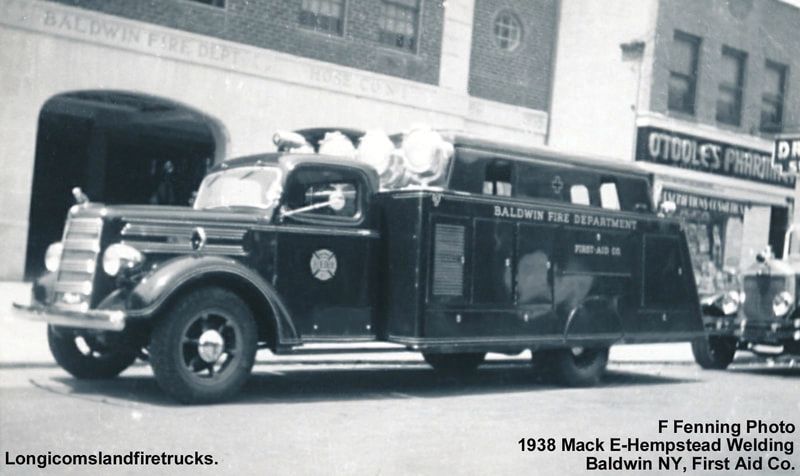 The nucleus of the company included volunteers from each company in Baldwin. A 1938 Mack rescue truck was purchased and housed in Hose Company #2's firehouse. Eventually, it was transferred to Headquarters in the middle of town, where it was more accessible.
When the World's Fair opened in 1938, Baldwin was invited to march in the opening parade. Fireman James McKeon carried the National Banner, and everyone felt splendid in their new uniforms, which were similar to those worn today.
When World War II broke out, Fire Headquarters was bustling with activity. Many meetings were held there for civil defense, and military equipment was stored in the building. Auxiliary firemen and policemen checked in and received orders from their superiors. Participants were photographed and given credentials as air raid wardens, firemen, policemen, and other civil defense personnel.
These were frightening days. A special siren was used to alert the public in the event of an air raid from Germany. When the siren sounded, traffic would come to a halt, and volunteers would report to their quarters, where they would await orders to respond.
Commands were transmitted from the Mineola Defense Headquarters to the Baldwin Fire Department dispatcher at Headquarters. When many of the volunteers were drafted, older auxiliary members had to man the trucks.
Blackouts were common. During one blackout, there was a fully involved structure fire on the northwest corner of Atlantic Avenue and Milburn Avenue, where an old hotel caught fire.
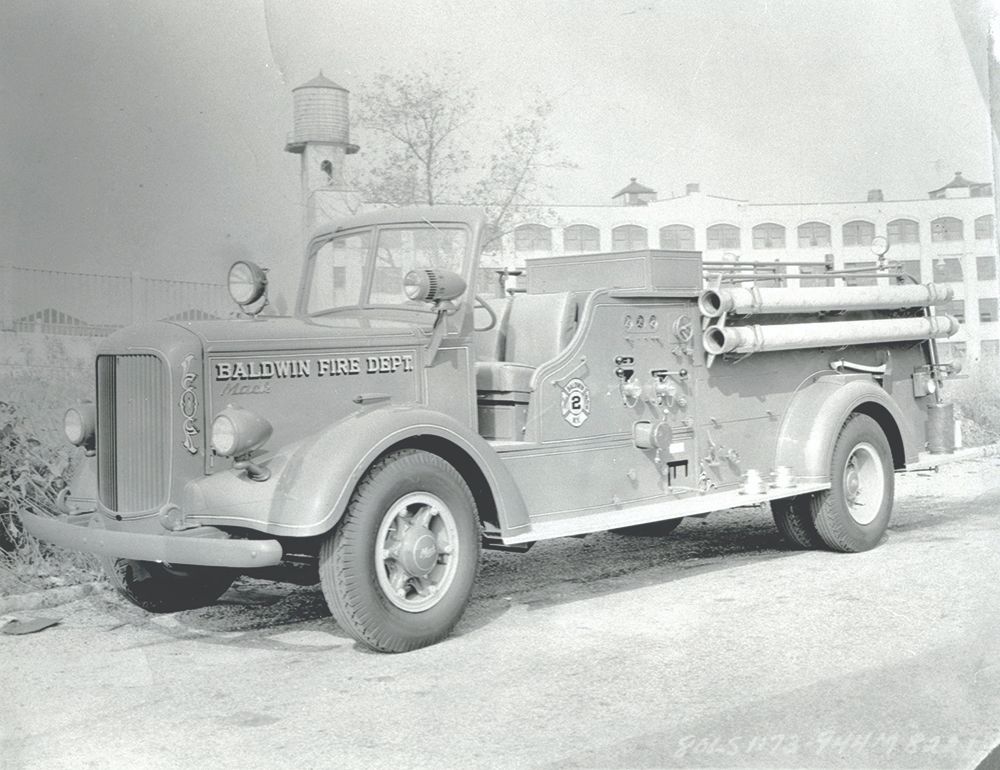 The Baldwin Fire Department was given a new Mack fire pumper by the government, which was housed in Hose Company #2's bay. This was because the United States Naval munitions plant was located in Baldwin, at Milburn Avenue and Cottage Place.
The truck was plain, with all brass fittings and no frills. After the war, it was refurbished to look like a fire truck and was used as a first-response vehicle. The old American LaFrance pump truck was converted into a floodlight truck and equipped for use at gasoline fires.
Baldwin was growing, and so was the Department. Julia Avenue, today's Rockville Drive, was the scene of many tournaments. The South Shore Yacht Club soon became the installation quarters for the new Chiefs.
During the summer, while Headquarters was being built, the trucks were stored in a lot across from the firehouse where the Baldwin Garden Apartments now stand. In the winter, Hose Company #1 held its meetings at Hose Company #3, and the Hook & Ladder truck was housed in a boathouse on Thomas Avenue. The trucks had to respond from these locations until the spring of 1936.
In the early days, before Nassau County had instructors, Baldwin hired a Chief from Hartford, Connecticut, to conduct drills and train the firemen. He drove around town in a “spiffy” Auburn Speedster Chief's car and wore a very fancy uniform—very impressive, indeed.
Hose Company #2 had a GMC that could travel only 30 miles per hour and had rubber tires. When Hose Company #2's firehouse was replaced in 1928, the old fire bell from the building was given to the church at Church Street and Park Avenue, where it can still be heard today.
Fire trucks in the 1930s had no windshields. Drivers were furnished with goggles and aviation-type helmets to use in bad weather. Fire trucks were always identified by very loud “Buckeye” exhaust whistles and band-operated sirens.
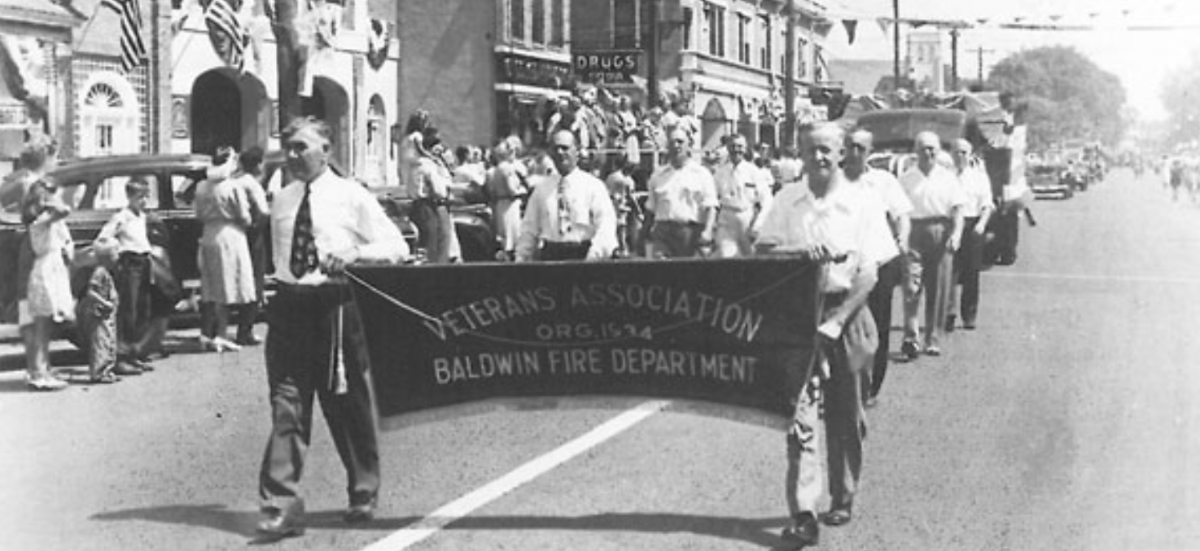 Prior to World War II, in July 1939, the Volunteer and Exempt Firemen's Benevolent Association was formed, with Sylvester Sorrentino serving as its first president.
When the war was over, the veterans returned, and the Fire Department celebrated its 50th Anniversary with one of the largest parades and block parties ever witnessed in Baldwin.
Baldwin Firemen's Day was always a major event, usually held on the Fourth of July with inter-company competitive drills. Trophies were donated by local merchants.
In 1949, Baldwin received its first aerial truck, an 85-foot Seagrave, which was turned over to Hook & Ladder Company #1. Hose Company #3 on Baldwin Avenue received a new American LaFrance 750 GPM pumper.
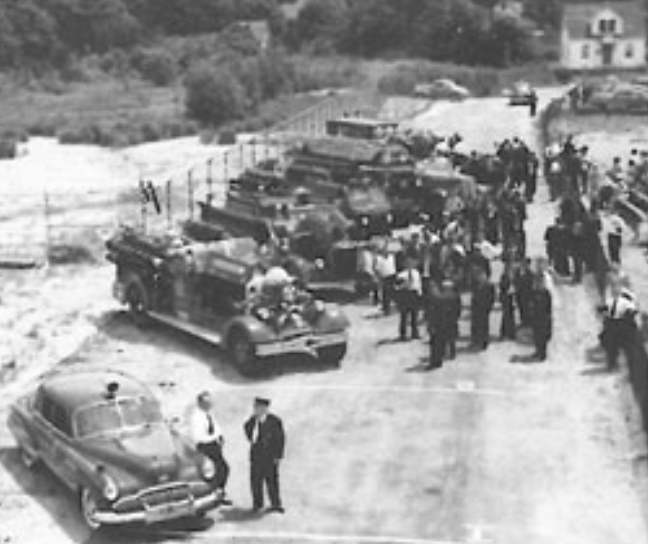 Radios were installed in all trucks, and a field was acquired on Atlantic Avenue for drills, including ladder work.
In 1951, Hose Company #1 had its pumper replaced by a new Ahrens Fox. The old Hook & Ladder truck and Hose Company #1's pumper were stored away for use by two new companies that were to be formed at the north end of Baldwin.
Rose Boulevard was selected as the site for the new firehouse. The property was acquired for $7,500, and the firehouse was erected at a cost of $105,000.
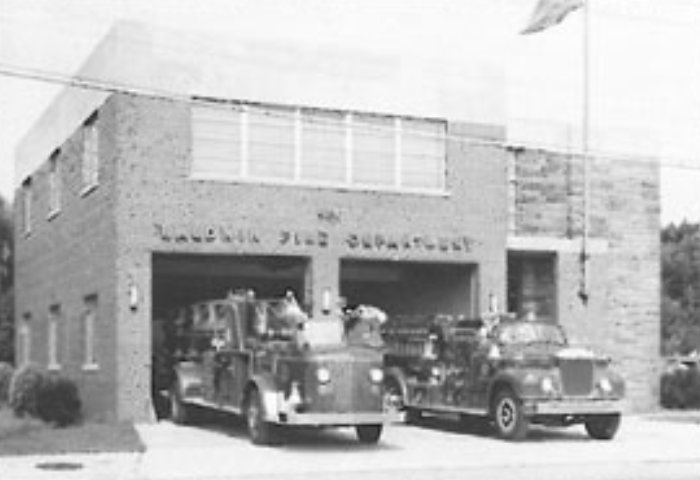 The companies were formed by volunteers from the Department and organized on September 19, 1951, as Hose Company #4 and Hook & Ladder Company #2 to serve the north end of Baldwin. The firehouse was dedicated the following year. Within five years, the trucks were to be replaced with a new 75-foot aerial truck and a new Mack 1,000-gallon pumper.
The new Gamewell Fire Alarm Box System, with a coded air whistle, was contracted for $33,535 in June 1951 and placed in service the following year. Baldwin now had fifty fire alarm boxes.
The Department continued to grow, and volunteers answered 345 calls in 1953. The Bureau of Fire Prevention was expanded, and inspections were conducted at all schools and businesses.
The First Aid Company did more than its share during the terrible Long Island Rail Road head-on collision in Rockville Centre in 1950. In fact, it was the only fully equipped first-aid truck available to cope with the situation that terrible night.
As a result, the Fire Commissioners were prompted to procure an even better vehicle for the company. This was realized in 1955, when a new GMC “Big Moe” emergency truck was delivered. It was the finest vehicle of its type in the area and would be copied by many departments for years to come.
The number of fire calls continued to increase, creating a need for paid fire dispatchers. In 1958, it was decided to hire four dispatchers to work eight-hour shifts.
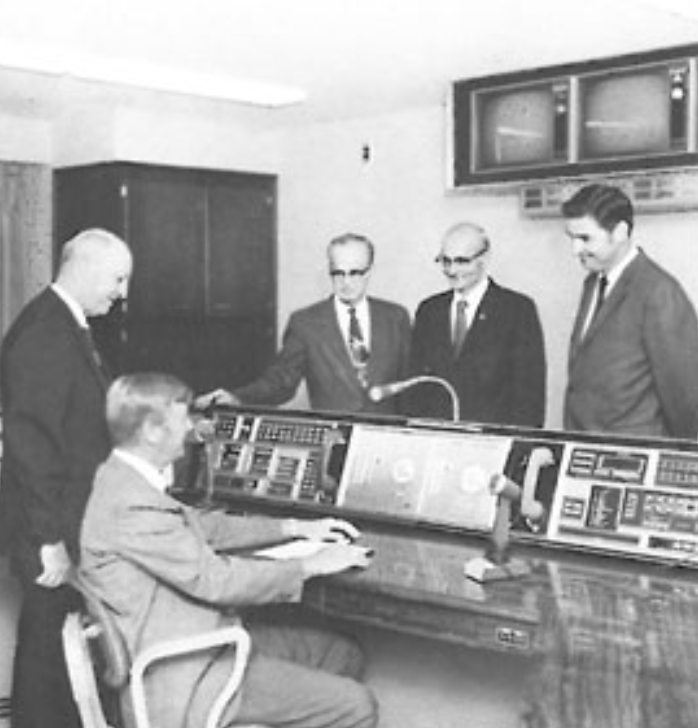 In 1959, Chief James C. McKeon was appointed Chief Dispatcher to operate the new system. He had served for many years as a volunteer on the Alarm Committee.
To expedite the answering of calls, a new group-alert telephone alarm system was installed in 1959. Baldwin, the third department in the country to have this new system, was able to dial the numbers of all companies for a General Alarm or select just one company to respond without the use of whistles. The dispatcher operated the system from the Alarm Room Fire Board.
In 1958, Hose Company #2 acquired a new Mack 1,000-gallon pumper as an additional engine for the Church Street house. It served the south end of Baldwin, which was growing rapidly at the lower end of Milburn Avenue and now extended to the Bay.
The Department was now averaging 600 calls per year, and a large portion of the alarms were for First Aid. The District then procured a new 1963 Cadillac Superior ambulance to relieve “Big Moe” of all the runs. This required more trained first-aid personnel than ever before, and consequently, the entire company received advanced first-aid cards.
The Baldwin Past Chiefs' Association, also very active, was organized in 1960.
In the latter part of 1969, the Department was badly in need of a repair shop to work on the trucks. The alarm system was cramped in a small room on the third floor of Headquarters, and the Commissioners had no room for Fire District records.
It was decided that an addition to Fire Headquarters was needed. An old store next to the building was purchased and demolished, and a bond issue was approved to erect a new hook-and-ladder bay, a repair shop in the rear, and a new alarm room above, along with a Commissioners Room and storage space for District records.
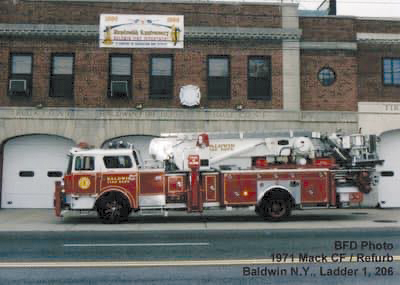 The addition was completed in 1971, just in time for the delivery of a new Mack Aerial Tower truck for Hook & Ladder Company #1. The repair shop was equipped with a lift that could raise trucks so they could be worked on from underneath, as well as a complete stock of tools and parts for all trucks.
Ex-Chief Dom Famularo was appointed Fire District mechanic. The Fire Alarm Room received a new modern console staffed by round-the-clock dispatchers.
The Board of Fire Commissioners appointed Ex-Chief James Cotton as Fire District Supervisor. His job was to coordinate the business of the Fire District for the Commissioners.
As the Department moved into the 1970s, greater emphasis was placed on training and developing Standard Operating Procedures. Chief Bob Simmons and Ex-Chief Dom Famularo made major contributions toward bringing the Department in line with modern firefighting tactics.
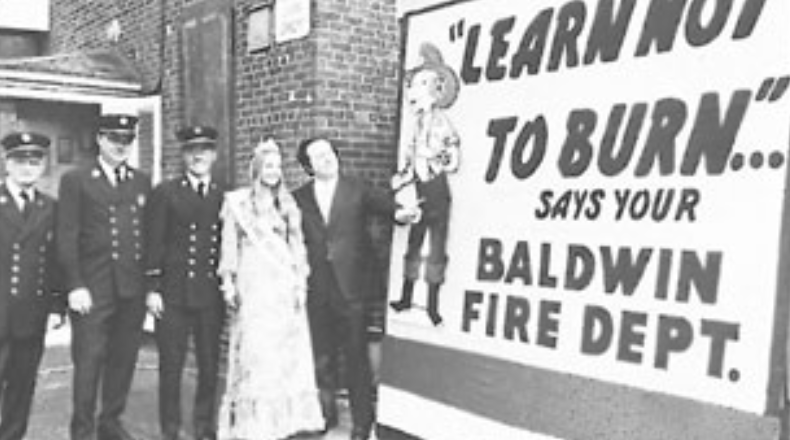 Chief Simmons and Chief Bob Deutsch were also very interested in Fire Prevention and revitalized the Bureau of Fire Prevention, appointing Gary Eckels as Chairman.
During the 1970s, the Department received many awards in the field of Fire Prevention, including recognition as having the Best Volunteer Fire Prevention Program in the United States.
The First Aid Company was responding to so many calls that a second ambulance was purchased and placed in service. Members of the First Aid Company had to attend many hours of training to keep up with the new lifesaving equipment they received. This training proved worthwhile, as many lives were saved through their dedicated work.
The 1980s saw new pumpers, refurbished pumpers, a new rescue rig, new radios, radio-controlled traffic lights, new turnout gear, female firefighters, and several renovations to the District buildings and the Alarm Room.
The 1990s brought many new changes, including OSHA regulations, more new turnout gear, a 100-foot aerial, and preparations for the beginning of the Department's second hundred years.
More can be found in our anniversary yearbook publications found here >